
Sport Psychology: For Athletes Who Want to Perform Well Under Pressure
Not Every Sport Psychologist Works the Same Way: What Athletes Should Know Before Getting Started
I work with athletes who often perform well in training but struggle to consistently access that same level of performacne in high-stakes moments - especially in selection environments, return-from-injury phases, or key competition moments. For example:
A footballer who trains confidently but becomes overly cautious and error-avoidant on match day after being dropped once
A sprinter whose performance drops sharply in finals despite consistent PBs in heats
A tennis player who spirals after early mistakes and struggles to reset between points, even though they “know the tools”
I get asked a version of this question a lot:
“How does your approach match the challenges I’m facing and the kind of support I’m looking for?”
And if you’re reading this, there’s a good chance you’ve been wondering the same thing.
Maybe you’ve tried working on your mindset before. Maybe you’ve had coaching that touched on confidence, focus, or motivation. Or maybe you’ve read books, listened to podcasts, or picked up “mental skills” tips that worked… for a while.
But something still doesn’t quite click.
That’s usually when this question shows up. Because at some point, athletes stop asking “what should I do?” and start asking “who is the right person to support me?”
And that’s a smart question.
It makes sense that athletes ask this before getting started. Sport psychology often looks similar from the outside, but the way practitioners actually work can be very different once you’re in it.
Most athletes I work with have already developed mental skills - breathing techniques, routines, mental imagery, self-talk strategies.
The issue usually isn’t that these tools are wrong - it’s that they don’t reliably hold up in the moments they’re most needed.
My focus is on what sits underneath that:
What triggers the drop in performance under pressure
What the athlete starts paying attention to in those moments (and what they stop noticing)
How their response patterns change when stakes increase
And how those patterns have been reinforced over time through sport experiences
In other words, we don’t just add more tools - we identify why the current tools stop working when it matters most.
So in this post, I’m going to walk you through what my approach actually looks like, who it tends to suit best, what kind of problems it’s designed for, and just as importantly, when it might not be the right fit.
If you’ve ever wondered whether this kind of support is right for you, keep reading.
🧠 How I Work and Who It’s For
At the core of my work is a simple idea:
We’re not trying to “fix” you. We’re trying to understand how you perform at your best, what gets in the way, and how to help you adapt under pressure.
As well as looking at times when things go wrong, I also explore what athletes are like at their best - the bright spots! Success leaves clues, so we look closely at when performance is working well as well as when it breaks down.
A lot of athletes come to me after doing the “basic” mental skills work. Things like goal setting, mental imagery, breathing techniques, or pre-performance routines. Those tools can be helpful, but often athletes reach a point where they say:
“I know what I should be doing… but I’m not doing it consistently.”
“My confidence drops and it starts affecting everything.”
“It’s not just sport anymore - it’s spilling into my broader life.”
That’s usually where my work becomes relevant.
🎯 The athletes who tend to benefit most
The athletes who get the most from working with me are typically:
Ambitious and committed to improving, not just in sport, but in life
Willing to reflect honestly on their patterns and behaviours
Open to exploring not just what they do, but how and why they do it
Interested in long-term development, not just short-term fixes
They often aren’t “new” to sport psychology. In fact, many have already tried it. What they’re looking for though is something more tailored, more personal, and more connected to their actual lived experience in sport.
The kinds of challenges I help with
Most of the athletes I work with come in because something is getting in the way of performance. Common examples include:
Performance slumps that feel hard to break out of
Confidence dropping at key moments
Fear of making mistakes or being judged
Returning from injury and struggling to trust the body again
Being dropped, overlooked, or dealing with selection stress
Pressure building to the point where it starts affecting enjoyment
And importantly, it’s often not just happening in sport.
A big part of my work involves supporting athletes whose performance challenges are starting to affect life outside sport too. That might look like irritability, overthinking, loss of enjoyment, or feeling stuck in a cycle that’s hard to break.
⚖️ What I don’t do
It’s also important to be clear about what this work is not.
I don’t work with clinical mental health conditions. If someone needs clinical support, I will always help them find the right professional for that.
My focus is performance psychology - helping athletes perform better, respond better when it matters most, and build a more stable, sustainable relationship with their sport.
🔍 Why this is different from “Mental Skills” work
Where this work is different from “mental skills” approaches is that we don’t start with tools and techniques.
This usually means looking at specific moments in competition - what happens in the seconds after a mistake, how attention shifts when stakes increase, and what the athlete starts doing differently without realising it.
That’s why two athletes with the same presenting issue (e.g., confidence loss in competition) might end up working on completely different underlying drivers.
What working together actually looks like
One of the biggest surprises for athletes is that I don’t sit in sessions telling you what to do.
Instead, we work together as a team in a confidential space where you can be completely honest about what’s actually happening in your performance. No judgement and no need to present yourself as having it all under control.
You are the expert on you - your sport, your experiences, your reactions under pressure. My role is to help you make sense of that and build a clearer picture of what’s going on, so you can respond more effectively.
The first phase is about understanding your performance patterns in real competitive contexts - not general traits, but what actually happens in those high-stakes moments.
In the first three sessions, we focus on:
Mapping specific performance moments where things shift (e.g., first error, selection pressure, finishing phase of competition)
Identifying the psychological and attentional patterns that show up in those moments (not general traits, but in-the-moment responses)
Testing small, practical adjustments in training or competition to interrupt those patterns early
Most athletes are surprised by how quickly things start to feel clearer. Not because everything changes immediately, but because they can finally see what’s actually driving their responses.
🔁 Between sessions
Most of the real progress happens between sessions.
Athletes often spend time:
Reflecting on what we discussed
Noticing patterns in training and competition
Trying small, intentional changes in behaviour
Acting in ways that are more aligned with the athlete they want to become
This isn’t about perfection. It’s about consistency and awareness.
📊 What progress tends to look like
Early on, many athletes report a simple but important shift: they feel lighter. More understood. More able to step back from their thoughts and emotions rather than getting pulled into them.
Changes tend to be subtle at first, but noticeable in how athletes respond in real time during training and competition.
Over time, athletes typically notice shifts like:
Recovering faster after mistakes (e.g., losing one point, then immediately resetting rather than carrying it into the next phase)
Less internal “noise” during competition (fewer spirals after errors or selection decisions)
More stable decision-making in competition instead of getting ‘tight’ and over-controlling execution
Confidence becoming less dependent on recent results and more based on what they’re doing to proactively build self-belief
These changes don’t happen all at once, but most athletes notice early shifts in how they respond to mistakes and pressure situations within the first phase of work.
Many describe it as “still feeling the pressure but not getting pulled around by it the same way.”
Performance isn’t just outcomes. It’s the quality of decision-making, clarity, and control you have while you’re in it. It’s also about how you experience your sport and your life while you’re striving for those outcomes.
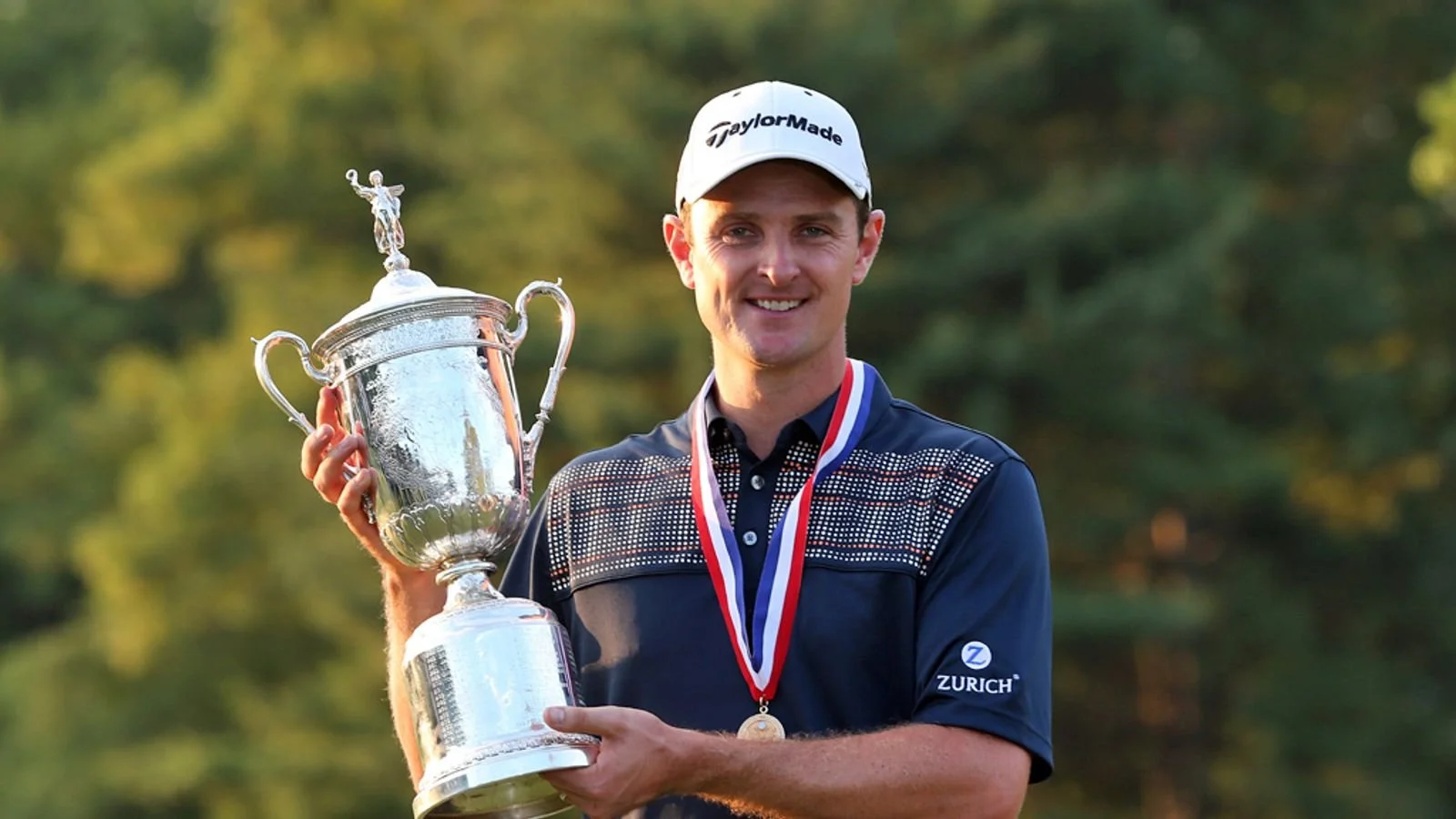
“For me it’s about chasing moments.”
Justin Rose
❓ A Common Follow-Up Question: “What if I’ve already tried sport psychology and it didn’t help?”
This is one of the most common concerns I hear.
And it’s valid.
A lot of athletes say things like:
“I tried sport psychology before and it didn’t really do anything for me.”
“It felt too general.”
“It was just mental skills stuff I already knew.”
Here’s the honest answer: sometimes that experience says more about the approach than it does about you.
Not all sport psychology is the same.
In some cases, athletes are given generic tools without enough attention to who they are, what their sport demands, and what their specific pressure points actually look like. When that happens, it’s not surprising that it feels unhelpful.
My approach is different in a few key ways:
We go deeper than surface-level techniques
We focus on understanding patterns, not just applying tools
We look at how sport is affecting you as a whole person, not just as an athlete in competition
We tailor everything to your sport, environment, and personality
If you’re someone who is already mentally “strong” in many ways but struggling with consistency, confidence, or repeated performance blocks, that’s often where this work becomes most useful.
A few reflection questions you might find useful
Before deciding whether any sport psychology approach is right for you, it can help to ask:
Are you looking for quick fixes, or are you willing to experiment and learn over time?
Do you want someone to give you answers, or help you develop your own?
Are your challenges mostly technical, physical, environmental, or psychological?
What would need to change in the next three months for you to feel this was worth it?
When have you performed at your best, and what helped - or got in the way of that happening more often?
These questions matter because they shape what kind of support will actually help you.
What if it’s not the right fit?
Fit matters.
If at any point I don’t believe I’m the right person to support you, I’ll say so - and I’ll help you find a more appropriate type of support.
If you feel the first session wasn’t useful or relevant to your situation, I offer a simple refund policy to keep this low-risk.
This is about you. Your sporting career. Your life. My role is to help you manage the challenges you will inevitably face.
📩 Next Step
If you’ve read this far, you’re probably not just looking for information. You’re trying to figure out whether something here fits what you’re dealing with.
The athletes who tend to benefit most from working together are the ones who are willing to engage, reflect honestly, and stay open to doing things a bit differently — especially when what they’ve tried before hasn’t quite worked.
If this sounds familiar, the next step is simply deciding whether you want to explore it further.
👉 You can sign up to my newsletter, where I share insights on performance, confidence, and the psychological side of high-level sport. Sign up here: www.richsille.com/#subscribe
📞Or you can book a free discovery call, where we can talk about what’s going on for you and whether working together makes sense. Book your call here: www.richsille.com/contact
Either way, the goal is the same: to help you get clearer on what you need, and what kind of support will actually help you perform at your best more consistently - and feel better while you’re doing it.