
Why Athletes Can Underperform Under Pressure (And How Spotlight Helps Fix It)
Everything felt right.
Your warm-up was good. You'd ridden this track hundreds of times. Your pace in practice was exactly where you wanted it.
Then the race started.
Suddenly your decisions didn't feel as clear. You hesitated into a corner you've nailed countless times. One small mistake snowballed into another. Afterwards, you couldn't stop replaying it in your head.
"Why can't I do it when it matters?"
If that sounds familiar, you're far from alone.
It’s one of the most common challenges I see in my work with athletes. Athletes can perform brilliantly in training, but struggle to access that same level when competition pressure rises.
Most of the athletes I support are not underperforming because they lack ability or commitment. They’ve already done the training, invested the time, and built the physical skills. The challenge is understanding why their mindset and behaviour can change when the pressure of competition arrives.
A pattern I often see is athletes trying to apply mental strategies that were never designed for them. They tell themselves to ‘stay calm’ when their best performances actually come when they’re energised. They copy another athlete’s pre-race routine because it works for them, only to find it then creates more frustration.
Or perhaps you repeat the same mistakes over and over again. You hesitate in the same situations, become overly aggressive, lose confidence after one mistake, or shut down completely when things don't go to plan.
You might even find yourself clashing with coaches or teammates because they don't seem to understand what's happening inside your head. And you struggle to explain it yourself.
Here's the thing. This isn't a lack of mental toughness.

This is something I discuss regularly with athletes. Many arrive believing they need to become mentally tougher, when the reality is that they often need a clearer understanding of how they respond to pressure and how to adapt effectively.
Modern sport is louder, faster, and more demanding than ever. Every session is analysed. Every mistake is visible almost instantly. Social media creates another layer of pressure, and athletes are constantly given generic advice like "stay calm," "trust the process," or "don't overthink it."
The problem is that none of those strategies consider the two things that shape every performance under pressure: your mindset and your behaviour.
In my work with athletes, I’ve found that one of the biggest barriers to consistent performance is that athletes often don’t understand how pressure changes their thinking and behaviour.
The first step is understanding what is actually happening under pressure - because you cannot develop effective strategies for a pattern you don’t understand.
To help athletes uncover these patterns, I use Spotlight - a framework that helps us understand how mindset and behaviour interact under pressure.
Spotlight is a contemporary tool, developed by combining evidence-informed principles from performance psychology, behavioural science, and athlete development to help identify how pressure influences decision-making, confidence, and behaviour.
Spotlight provides two complementary frameworks to help athletes understand exactly what happens when the pressure rises.
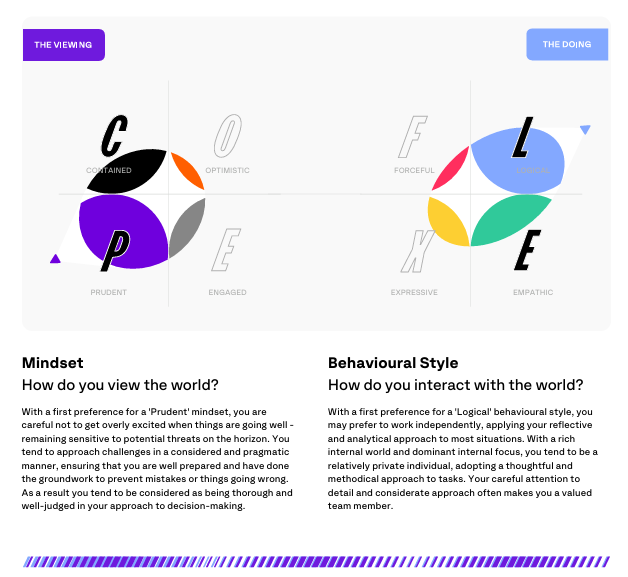
The first is the COPE Framework, which explores your mindset - how you naturally process challenge, uncertainty, and decision-making under pressure.
The second is the FLEX Framework, which maps your behavioural style - how your communication, confidence, interactions, and actions shift as pressure builds.
Together, COPE and FLEX provide a clearer picture of how your mindset and behaviour interact when pressure rises .
Most importantly, Spotlight is a strengths-based development tool, helping you to adapt under pressure.
Instead of guessing why you hesitate, over-commit, lose confidence, or struggle to communicate, you begin to understand the patterns driving those behaviours.
Understanding why you respond to pressure the way you do is the first step. The real change comes when you use that insight to build strategies you can practice consistently.
You stop fighting yourself. You start using strategies that actually fit the way you're wired. Your performances become more consistent, your confidence steadier, and pressure stops feeling like something to fear.
In this article, I share three strategies that help athletes understand both their mindset and behaviour under pressure so they can perform closer to their best when it matters most.
Let's break it down.
Strategy 1: Map Your Mindset and Behaviour Under Pressure
Before you can stop underperforming under pressure, you need to understand how you actually respond to pressure - not just how you think you respond.
Most athletes only notice the outcome.
"I hesitated."
"I rushed that decision."
"I lost confidence."
"I became emotional."
What they don't see is what's happening underneath.
That's where Spotlight is different.
Rather than looking at performance through a single lens, Spotlight combines the COPE Framework and the FLEX Framework.
COPE helps athletes understand their mindset under pressure - how they naturally process uncertainty, approach challenge, and make decisions when the stakes are high.
FLEX reveals how that mindset is expressed behaviourally - how communication changes, confidence fluctuates, interactions shift, and behaviours adapt under pressure.
Together, they help explain why athletes underperform under pressure - and, more importantly, what they can do about it.
My Approach
My approach has never been about fixing athletes or giving them another list of mental skills they need to force themselves to use. The athletes I work with don’t need another generic instruction to ‘be more confident’. They need to understand themselves well enough to perform consistently in the environments where it matters most.
It's to help you recognise the strengths you already possess, understand how pressure can temporarily disrupt them, and identify the conditions that allow those strengths to show up more consistently.
After debriefing more than 150 Spotlight profiles with athletes, I’ve noticed a consistent pattern: athletes often arrive believing their problem is one thing - confidence, composure, decision-making - but once we explore how they respond under pressure, we often uncover a different explanation.
And I still hear the same response from athletes (often with a wry smile):
"That explains so much."
In the real world
One professional cyclist I worked with believed confidence was his biggest issue.
Through our work together, we discovered that what looked like a confidence issue was actually a combination of uncertainty under pressure and difficulty communicating his needs.
His COPE profile helped us identify that pressure increased his need for certainty before acting.
Suddenly, what had felt like a confidence problem made perfect sense.
It wasn't a lack of ability.
It was a predictable interaction between his preferred mindset and behavioural style under pressure.
So, instead of trying to force himself to become more naturally vocal, we developed ways for him to prepare key messages before team discussions and recognise when uncertainty was affecting his decision-making.
Strategy 2: Build SOLUTIONS That Fit Your COPE and FLEX Profiles
Once you understand your COPE and FLEX profiles, you can build strategies that fit both your mindset and behavioural style.
This is where many athletes unknowingly make life harder for themselves.
Sport is full of well-meaning advice.
"Stay calm."
"Be more aggressive."
"Trust the process."
"Focus on what you can control."
That advice might work brilliantly for one athlete - and make another perform even worse.
Why?
Because no two athletes experience pressure in exactly the same way.
Your COPE profile may show that you naturally seek certainty before committing to action.
Your FLEX profile may show that pressure causes you to become quieter and less likely to communicate what you need.
Another athlete may become impulsive, highly vocal, or over-commit under pressure.
The solution shouldn't be the same.
Some athletes genuinely need more activation.
Others need more structure.
Some need greater clarity before competing.
Others perform best when they feel connected to the people around them.
When your preparation aligns with both your mindset and behavioural style, everything starts to feel more natural.
Your routines become easier to repeat.
Your communication improves.
You recover faster after mistakes.
You stop trying to become someone else and start performing as the very best version of yourself.
The professional cyclist didn't need to become louder or more extroverted.
Instead, we built ways of working that matched both his COPE and FLEX profiles, helping him recognise pressure earlier, organise his thoughts more clearly, and communicate with confidence when it mattered.
Eventually, he stepped into a team leadership role.
Ironically, leading wasn't the difficult part.
Asking for the opportunity had been.
Understanding his profile gave him the confidence to navigate that pressure successfully.
The goal isn't to become a different athlete.
It's to become a more adaptable one.
Athletes who perform consistently under pressure aren't always the calmest or the most confident.
They're the athletes who can adapt their thinking and behaviour to meet the demands of the moment.
That's why Spotlight doesn't give every athlete the same strategy.
It helps each athlete build an adaptable approach based on their own COPE mindset profile and FLEX behavioural style.
Strategy 3: PractiCe Under Realistic Pressure
Understanding your profile is only the beginning.
The real progress comes from applying what you've learned consistently.
That means using routines designed around your COPE and FLEX profiles during training—not waiting until race day.
It means deliberately rehearsing how you'll respond when mistakes happen.
Reviewing performances through your COPE and FLEX profiles to identify which pressure patterns showed up.
Communicating your needs more clearly with coaches and teammates.
Refining your strategies based on real-world experience.
Over time, pressure becomes predictable rather than chaotic.
You recognise your own warning signs earlier.
You understand what's happening internally before it affects your performance.
You know which strategy to use because it's been built specifically for the way you think and behave.
That's exactly what happened with the cyclist.
The team meetings that once felt intimidating became opportunities to lead because he'd practised responding differently long before those moments arrived.
Consistency comes from practicing adaptability, under simulated pressure.
The more often you rehearse responding to pressure using strategies that fit your profile, the more naturally you adapt when the pressure is real.
You Might Be Wondering...
"Do I really need a profile? I already know how I am under pressure."
What I’ve found is that athletes often know what pressure feels like, but they don’t always understand what pressure does to their decision-making, confidence, and behaviour.
Spotlight gives us a structured way to identify those patterns.
By combining the COPE and FLEX Frameworks, it reveals the mindset shifts and behavioural patterns that happen automatically while you're focused on competing.
It doesn't replace your experience.
It gives you language, clarity, and practical strategies based on how you naturally perform.
"Isn't this just another personality test?"
No.
Because Spotlight is strengths-based, it isn't about putting athletes into boxes.
In fact, it's the opposite.
It helps you understand how to become more adaptable while staying true to your natural strengths.
The COPE and FLEX Frameworks don't tell you who you are as a person.
They show how your mindset and behaviour interact when the pressure rises, and they provide strategies that fit your natural style rather than forcing you into someone else's.
The purpose isn’t to label you. It’s to identify patterns you can recognise, practice, and adapt when competition creates pressure.
"Will this actually help me stop underperforming under pressure?"
It can help you understand and change the patterns that contribute to underperforming under pressure—but it isn’t a shortcut or a replacement for training and preparation.
Spotlight won't make you physically faster or technically better overnight.
What it does is remove the psychological friction that prevents you from expressing the ability you already have when the pressure is highest.
When you understand your COPE mindset profile and FLEX behavioural style, you make cleaner decisions, communicate more effectively, recover faster from mistakes, and stay closer to your best more often.
Those improvements are often the difference between performing brilliantly in training and performing brilliantly in competition.
What I Believe

The biggest lesson I’ve learned from working with athletes is that consistent performance doesn’t come from trying to eliminate pressure. Pressure is part of sport. The athletes who develop most effectively are the ones who understand their own responses, recognise their patterns, and learn how to adapt when demands increase.
Performing Under Pressure Starts With Understanding Yourself
If you regularly underperform under pressure, remember this:
Athletes rarely underperform under pressure because they lack ability.
More often, they underperform because they don't yet understand how pressure changes their mindset and behaviour.
That's exactly what the COPE Framework and FLEX Framework are designed to uncover.
Spotlight takes a strengths-based approach, helping you recognise the qualities you already have while giving you the tools to become more adaptable when the pressure rises.
Because performing under pressure isn't about becoming someone different.
It's about understanding yourself well enough to adapt while continuing to play to your strengths.
That's where consistent performance begins.
For athletes and performers who want support applying these insights, 1:1 coaching uses your Spotlight profile as a starting point to build personalised strategies, review real performance situations, and develop the consistency needed to perform under pressure.
“Be yourself, skilfully.”
Your Next Step
If you’re an athlete who wants to understand why pressure affects your performance and develop strategies that fit you, this is the work I do.
📞 Book a free discovery call, where we can talk about what’s going on for you and how working together might be beneficial for you. Book your call here: www.richsille.com/contact
If you’d like to start exploring these ideas a bit more, my regular newsletter The Game Plan is where I share practical insights into performance psychology, athlete stories, and tools you can apply immediately to better understand your mindset, manage pressure more effectively, and perform more consistently when it matters most.
The goal isn't to fill your inbox with motivation. It's to give you practical ideas you can put into action.
👉 Sign up to The Game Plan newsletter here: www.richsille.com/#subscribe.