
Self-Belief That Delivers: Why You Don't Need To Chase Confidence To Perform Well
Have you ever felt anxious and underperformed?
You’re definitely not alone. Many athletes get stuck in the same frustrating loop.
You don’t believe you’ll perform well because you don’t feel confident.
But you think confidence only comes after performing well.
So confidence never arrives… it’s a downward spiral!
I help athletes just like you to stop chasing confidence and start building self-belief, so you perform better and feel better when it matters most.
Do you really need confidence to perform well?
You’ve probably heard it countless times in sport: “You just need to be more confident.”
Confidence is often treated as the magic ingredient of high performance. If you feel confident, you’ll perform well. If you don’t, you probably won’t - or so we’re told.
But the truth? Confidence is important but it isn’t the engine of performance. Top athletes and high-performing leaders often perform brilliantly even when they don’t feel confident. And sometimes, performance falters even when confidence is high.
The real driver is self-belief - a trust built through preparation, repeated action, and experience under pressure.

In this article, you’ll discover:
Why chasing confidence can hold you back
How self-belief drives consistent performance
Practical, evidence-backed strategies to strengthen self-belief today
🤔Why The Confidence Myth Persists
It’s everywhere. Books, articles, interviews with top performers - even coaches often suggest that:
Confidence → Good performance
But if you look closely, high performers rarely feel confident all the time. They often compete with nerves, doubt, and uncertainty. The difference? They act effectively regardless of how they feel.
Self-belief isn’t generated by pep talks or positive thinking. It comes from:
Preparation
Action
Repeated experience under pressure
“We are what we repeatedly do. Excellence, then, is not an act, but a habit.”
High performance is built through repetition - learning, adapting, and executing consistently until trust in your abilities becomes automatic.
⏳How Chasing Confidence Can Hold You Back
Believing you need confidence first can subtly sabotage performance:
Waiting Until You “Feel Ready”
Hesitation causes missed opportunities - taking a pass instead of a shot, or avoiding high-stakes challenges.Misinterpreting Normal Emotions
Nerves, doubt, or anxiety aren’t problems - they’re signals. Believing you must feel confident first makes these emotions disruptive.Performance Becomes Emotion-Dependent
Your results ride an emotional rollercoaster. When confidence dips, performance dips.Avoiding Challenging Situations
Confidence drops naturally under pressure. If you rely on feeling confident, you may shrink when it matters most.Mistakes Hit Harder
Fragile confidence magnifies errors, leading to overthinking and hesitation. Self-belief, by contrast, allows quick reset and forward momentum.
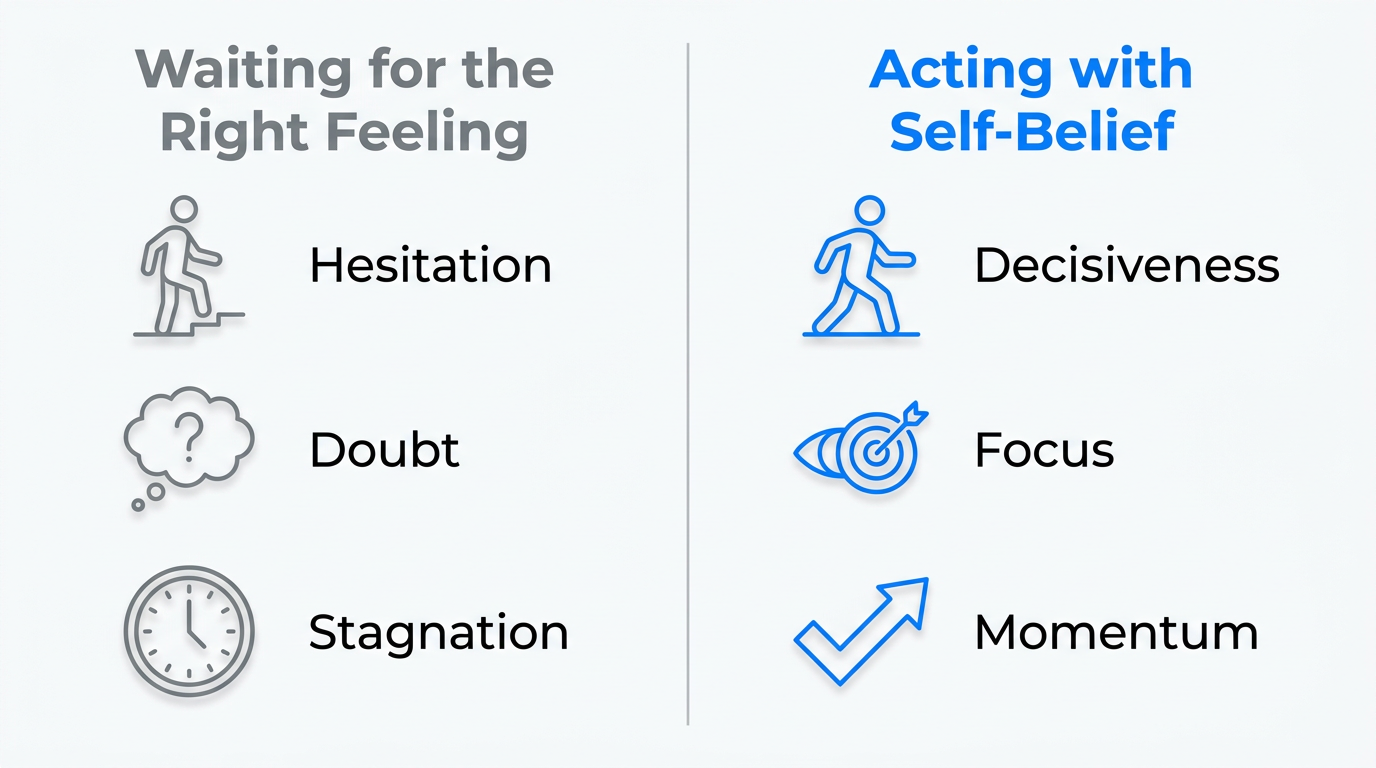
High performers don’t rely on feelings - they rely on preparation, action, and self-belief.
📈What Really Drives High Performance
Performance depends on trained behaviours and action, not feelings. Confidence can help but it’s usually a by-product of self-belief, not a prerequisite.
The real drivers:
Skill developed through repetition
Preparation and planning
Focus on execution
Commitment to action under pressure
The sequence looks like this:
Preparation → Evidence → Self-belief → Confidence (bonus) → Performance
Not: Confidence → Good performance
Even elite athletes compete with doubt, yet still perform world-class feats. Their focus? Execution, not emotion.
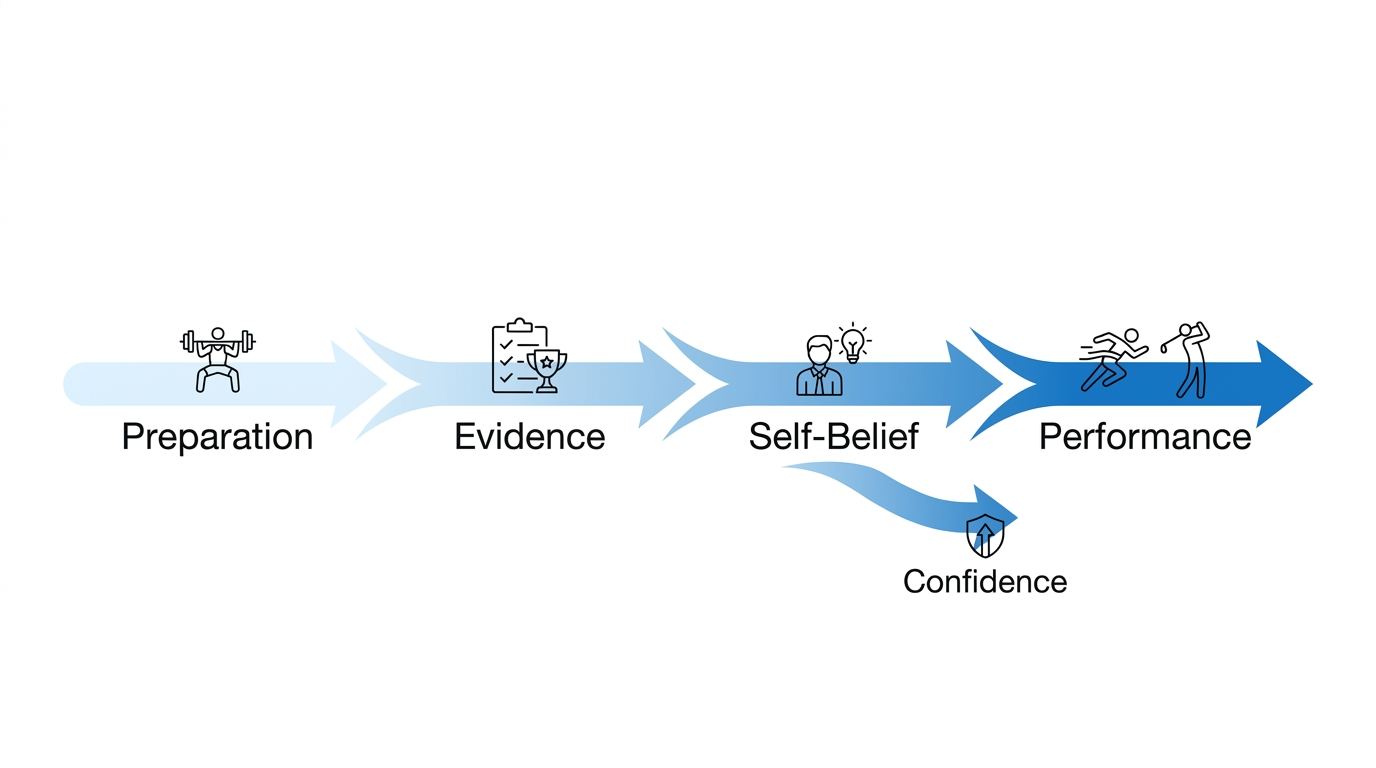
High performance is built through preparation and action. Confidence is often the result - not the cause.
💡What To Do Differently
Once you understand that confidence isn’t the driver of performance, your focus shifts in a powerful way.
Instead of chasing confidence, you strengthen the behaviours that build self-belief.
Here are three key foundations.
1. Trust Your Preparation
Self-belief needs evidence.
Every training session, every repetition, every piece of preparation contributes to that evidence.
There are no shortcuts in high performance.

“Preparation is everything”
- Drew Brees, NFL Quarterback
When athletes repeatedly prepare well, they build a rational basis for belief.
Before competition, instead of asking “Do I feel confident?”, ask:
What work have I done to prepare?
What skills have I trained for this situation?
Your preparation is the proof.
2. Take the Positive Action
Self-belief becomes visible through decisive action - especially when doubt appears.
Hesitation feeds uncertainty. Action reinforces belief.
That might mean:
Taking the early shot
Demanding the ball early
Engaging physically from the start
Executing your first play assertively
Confidence often grows after engagement, not before it.
Action first. Confidence later.
3. Honour Small Promises to Yourself
Self-belief is essentially self-trust.
And trust grows when you consistently do what you said you would do.
Every time you:
Complete difficult training
Stick to your routines
Respond well after mistakes
you strengthen the internal message:
“I can rely on myself.”
Over time, that becomes a powerful and stable belief.
🏆Evidence From Real Clients
Paul, Motorcycle Road & Track Racer
Problem: Slump in performance, low confidence
Intervention: Shifted focus from chasing confidence to building self-belief through preparation and decisive action
Result: Returned to podium finishes within 3 months, reporting greater consistency and enjoyment
David, Manager in Finance
Problem: Crippling hesitation during high-stakes presentations
Intervention: Tailored mental performance plan including preparation protocols, rehearsal under pressure, and actionable micro-habits
Result: Achieved measurable improvement based on subjective feedback - promotion to CFO within 12 months, improved decision-making under stress, and better work-life balance
These aren’t isolated anecdotes. I’ve worked with hundreds of athletes and business leaders, seeing tangible improvement in performance consistency, resilience, and wellbeing.
💪3 Ways to Strengthen Self-Belief Today
Trust Your Preparation
Evidence builds belief. Track your training or preparation sessions - every repetition counts.Mini exercise: Keep a “Training Diary” or “Preparation Log” noting specific skills practiced, challenges faced, and lessons learned.
Take Positive Action
Action reinforces belief. Start with small but decisive moves, even when doubt is present.Mini exercise: Commit to one bold action in training or a meeting and record the outcome.
Honour Small Promises to Yourself
Self-trust grows through consistent follow-through.Mini exercise: Set one micro-goal each day (e.g., finishing a challenging drill) and reflect on completion.
📌Key Takeaways
Confidence is transient; self-belief is reliable.
Performance is driven by actions, preparation, and repetition, not feelings.
High performers excel under pressure because they act regardless of confidence.
Small, consistent steps strengthen self-trust and build a resilient mindset.
🚀Next Steps: Take Control of Your Performance
Your potential isn’t limited by how confident you feel today - it’s shaped by the actions you take.
Build self-belief, and confidence will follow.
What do you need to do to build self-belief that delivers?
Option 1 – Stay Ahead with The Game Plan
Subscribe to the newsletter for practical insights and strategies to strengthen self-belief.
👉 Subscribe to The Game Plan newsletter today here
Option 2 – Work With Me Directly
For athletes and executives ready to perform consistently well:
Free discovery call
Personalised mental performance plan
Ongoing support and accountability
👉 Book your free Discovery Call here